
All cryptocurrencies
Generally, cryptocurrency price data will be more reliable for the most popular cryptocurrencies. Cryptocurrencies such as Bitcoin and Ethereum enjoy high levels of liquidity and trade at similar rates regardless of which specific cryptocurrency exchange you’re looking at https://slwebsitedesign.com/twinspires/. A liquid market has many participants and a lot of trading volume – in practice, this means that your trades will execute quickly and at a predictable price. In an illiquid market, you might have to wait for a while before someone is willing to take the other side of your trade, and the price could even be affected significantly by your order.
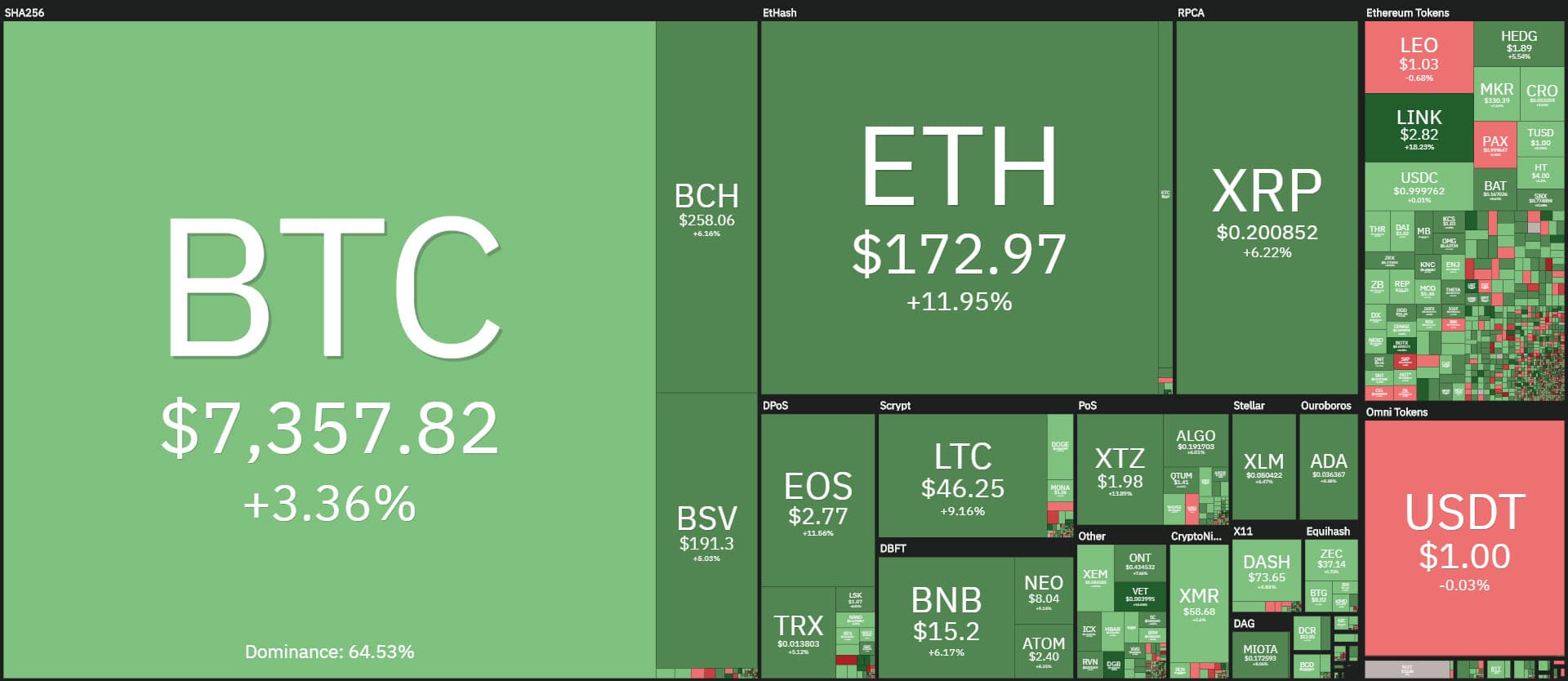
The total crypto market volume over the last 24 hours is $172.65B, which makes a 34.94% increase. The total volume in DeFi is currently $27.22B, 15.77% of the total crypto market 24-hour volume. The volume of all stable coins is now $161.34B, which is 93.45% of the total crypto market 24-hour volume.
The miner that provides the correct solution to the problem first gets to add the new block of transactions to the blockchain and receives a reward in return for their work. Bitcoin miners are rewarded with BTC, Ethereum miners are rewarded with ETH, and so forth.
Value of all cryptocurrencies
Yes! It is completely legal to use cryptocurrency such as Bitcoin. Individuals are allowed to use which currency they want as long as both parties agree on the same means of payment. However, there are countries that have indirectly or partially prohibited cryptocurrency. The reason for this varies, but generally, the government wants more control over the financial market. Here is a list of all countries’ laws about Bitcoin.
The first chain to launch smart contracts was Ethereum. A smart contract enables multiple scripts to engage with each other using clearly defined rules, to execute on tasks which can become a coded form of a contract. They have revolutionized the digital asset space because they have enabled decentralized exchanges, decentralized finance, ICOs, IDOs and much more. A huge proportion of the value created and stored in cryptocurrency is enabled by smart contracts.
Cryptocurrencies are digital assets that are secured by cryptography. They use decentralized networks to transfer and store value, and the transactions are recorded in a publicly distributed ledger known as the blockchain. Transactions are verified by network nodes and recorded in a public distributed ledger known as the blockchain. Cryptocurrency transactions are secure, and are verified by a decentralized network of computers.
The very first cryptocurrency was Bitcoin. Since it is open source, it is possible for other people to use the majority of the code, make a few changes and then launch their own separate currency. Many people have done exactly this. Some of these coins are very similar to Bitcoin, with just one or two amended features (such as Litecoin), while others are very different, with varying models of security, issuance and governance. However, they all share the same moniker — every coin issued after Bitcoin is considered to be an altcoin.
Almost. We have a process that we use to verify assets. Once verified, we create a coin description page like this. The world of crypto now contains many coins and tokens that we feel unable to verify. In those situations, our Dexscan product lists them automatically by taking on-chain data for newly created smart contracts. We do not cover every chain, but at the time of writing we track the top 70 crypto chains, which means that we list more than 97% of all tokens.
Welcome to CoinMarketCap.com! This site was founded in May 2013 by Brandon Chez to provide up-to-date cryptocurrency prices, charts and data about the emerging cryptocurrency markets. Since then, the world of blockchain and cryptocurrency has grown exponentially and we are very proud to have grown with it. We take our data very seriously and we do not change our data to fit any narrative: we stand for accurately, timely and unbiased information.
Are all cryptocurrencies based on blockchain
A consensus algorithm is the third component. And last but not least, there is the issue of punishment and reward. Game Theory is where the latter comes from. It ensures that people will always follow the rules in their best interests. Each time users establish a consensus and add a new block to the chain, they receive a token or coin. Punishment for bad actors, on the other hand, is a loss of money spent on computational power.
Worldwide, network hashing power as measured by the number of bitcoins miners own has been hovering around 1 million for some time now. The last time that was so high, was back in November 2013. The thing to keep in mind is that is still relatively low.
Why do this? The food industry has seen countless outbreaks of E. coli, salmonella, and listeria; in some cases, hazardous materials were accidentally introduced to foods. In the past, it has taken weeks to find the source of these outbreaks or the cause of sickness from what people are eating.
How do I join Bitcoin Mining Pools? If you’re going to join a pool you’ll be making a deal with other miners to mine bitcoins together. The more miners that join the pool and play by the rules, the larger the reward each of them receives. This means that running your hardware is not necessary and washing food trays will not earn as many bitcoins as you’d expect. If joining a mining pool sounds like you want to become part of an official organization, read our guide on how to mine Bitcoin privately for some tips.
Blockchain is a decentralized digital ledger that securely stores records across a network of computers in a way that is transparent, immutable, and resistant to tampering. Each «block» contains data, and blocks are linked in a chronological «chain.»
